Frequently Asked Questions
The most-asked questions about fashion designers.
What exactly does a fashion designer do on a day-to-day basis?
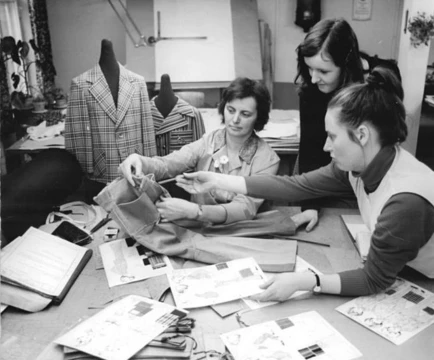
A fashion designer conceives and creates clothing, accessories, or textile designs, translating a creative vision into wearable garments through sketching, fabric selection, pattern-making, and production oversight. Their work may be for a personal label, a major house, or a specific client.
Who are the most iconic figures in fashion design history?
Coco Chanel, Christian Dior, and Yves Saint Laurent are widely regarded as foundational pillars who reshaped modern silhouettes and industry culture. More recently, Alexander McQueen, John Galliano, and Rei Kawakubo have pushed the boundaries of what fashion can express.
Where should a newcomer begin exploring the world of fashion designers?
A good entry point is following the four major fashion weeks—Paris, Milan, New York, and London—through runway coverage and editorial write-ups. Pairing that with biographies of a few landmark designers provides both historical context and a feel for the craft's evolution.
What is the difference between haute couture and ready-to-wear?
Haute couture refers to fully custom, handcrafted garments made to order for individual clients under strict guild regulations, while ready-to-wear is produced in standard sizes for retail. Couture sits at the most exclusive tier, but ready-to-wear is where most designers reach a broader audience.
Which cities are considered the major hubs of the fashion industry?
Paris, Milan, New York, and London are traditionally called the Big Four fashion capitals, each hosting its own dedicated fashion week. In recent years, cities like Tokyo, Seoul, and Lagos have gained significant recognition for their emerging design scenes.
How do designers typically build their careers from education to launching a label?
Many start with a degree from a school such as Parsons, Central Saint Martins, or the Paris Academy, then intern at an established house to learn production and business. From there they either join a brand's design team or launch their own label, often beginning with small collections shown at emerging-designer platforms.
What awards or recognitions carry the most weight in the industry?
The CFDA Awards and the British Fashion Awards are among the most cited honors for active designers. Long-term recognition often takes the form of retrospective museum exhibitions or lifetime-achievement titles from national fashion bodies.
What are some of the most talked-about moments in fashion design history?
The 1970s backlash against restrictive post-war silhouettes and the 2018 #BalanceTonCouture movement highlighting diversity gaps are frequently cited turning points. Designers' public rivalries, such as the Chanel-versus-Dior tension of the 1950s, also shaped industry culture for decades.
How does fashion design differ from other creative disciplines like architecture or graphic design?
Fashion is uniquely bound to the human body and its movement, requiring a designer to balance aesthetics with fit, drape, and everyday wearability. It also operates on an accelerated seasonal cycle—typically two major collections per year—that is faster than most other design fields.
Is fashion design only about luxury, or does it have a broader scope?
The field spans everything from ultra-exclusive ateliers to sustainable streetwear, sportswear, and adaptive clothing for people with disabilities. Many contemporary designers focus on social impact, upcycling, or making garments accessible well beyond the traditional luxury market.